IPPT Calculator
Based on current MINDEF/SAF IPPT scoring tables
Age Group: -
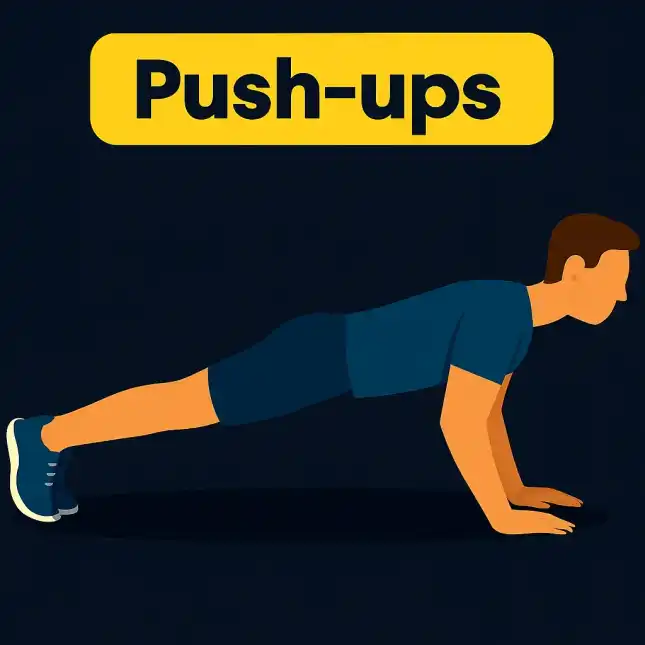
Push-Up Exercise:
To test upper body strength and muscular endurance.
Maximum 25 Points
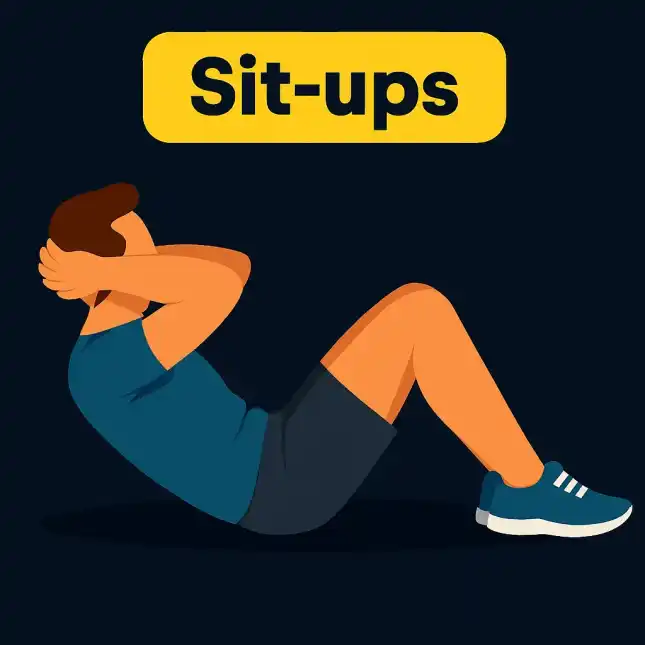
Sit-Up Exercise:
Checks core and abdominal muscles performance.
Maximum 25 Points
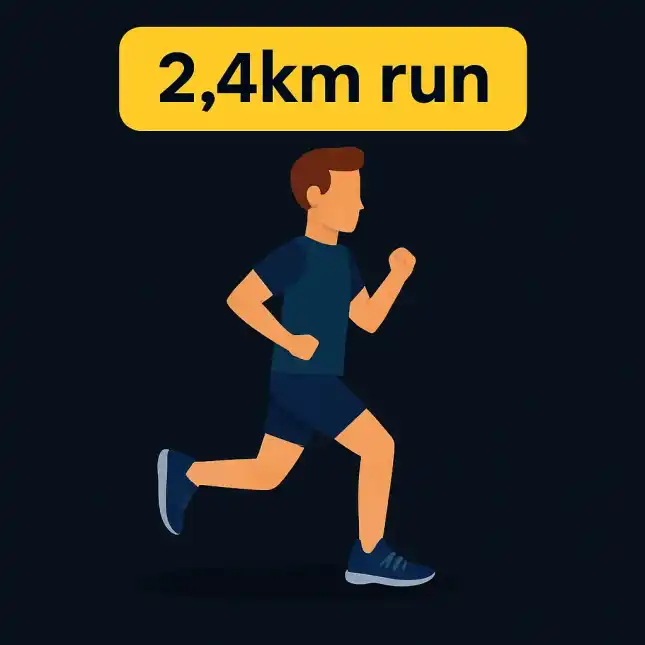
2.4km Running:
Assesses cardiovascular function and lower body capability.
Maximum 50 Points
IPPT Score Calculator
Interested in calculating your IPPT score? Say no to traditional IPPT score chart and sheet. Here you interactively get IPPT Scoring to help you track your performance in push-ups, sit-ups, and the 2.4KM run. Checking your IPPT passing score, IPPT gold/silver standards, and cash incentives are just a click away. This IPPT calculator replaces difficult IPPT chart with a tool-based web application.
How to Use the Tool
Scores and Awards Criteria
Following is the result table that shows how much award (if any) is given based on the score achieved in your IPPT test. You considered fail if your marks are 50 or less and pass if you get 51 points. Gold is given for 85 points. To be eligible for any award, make sure you score at least one point in each station.
If you’re aiming for Gold or Silver, this strategy guide breaks down how to maximise your score across all IPPT stations.
Awards | Points |
|---|---|
Fail | ≤ 50 |
Pass (NSMen only) | ≥ 51 |
Pass (with incentive NSMen only) | 61 – 74 |
Silver + $300 | 75 – 84 |
Gold + $500 | ≥ 85 |
Gold (Commandos, Divers, or Guards) | ≥ 90 |
Male IPPT Scoring Charts
It is all about the math: sometimes doing just two extra push-ups can save you from having to shave 20 seconds off your run. If you want to manually map out your game plan or see exactly how the point system scales across different age brackets, check out the full breakdown in the Male IPPT Scoring Tables & Training Guide.
Female IPPT Calculator
The standards aren’t one-size-fits-all, and neither is this tool. Having spent countless hours on the ground helping the female trainees to perfect their bent-knee push-ups and running pace, Our team made sure this calculator does exactly the same for you mathematically. Just select your gender, and the tool automatically adjusts to the female-specific scoring metrics. It calculates your exact points across all age groups so you know exactly where you stand before test day. Want to see the raw data, station rules, or figure out your exact target reps? Head over to my complete guide on the Female IPPT Scoring Tables and Standards.
Best Online IPPT Calculator Tools Available in Singapore
Tool Name | Best For | Key Features | Requires Login? |
|---|---|---|---|
The IPPT Calculator (Web App) | Quick strategy & instant scoring | Real-time score impact, male/female metrics, instant BMI calculation, mobile-friendly, Free | No |
Official OneNS Portal | Official administration | Mandatory for booking IPPT/NS FIT sessions, tracking historical official scores | Yes (Singpass) |
MINDEF Scoring Charts (PDF) | Offline viewing | Reliable backup at the FCC, viewing raw data scaling across all age groups | No |
The best online IPPT calculator tools in Singapore depend on your needs. For official record-keeping, the OneNS portal is required. Official MINDEF IPPT charts are also available but very difficult to read. However, for free instant score calculation, strategy planning, and mobile-friendly access without needing a Singpass login, dedicated web applications like this tool is the top choice for NSmen, pre enlistee and SAF.
Preparing for the IPPT Sit-Ups Station
The sit-up station looks simple enough lie down, bend your knees, and start moving. But anyone who has trained for the IPPT knows that squeezing out those last few reps within one minute is no small task. The key to doing well is a mix of core strength, technique, and pacing.
Build the Right Muscles
Most of the work during sit-ups comes from your core, especially the rectus abdominis the muscles that make up your “six-pack.” Your hip flexors also play an important supporting role, helping you lift your upper body each time.
Find Your Rhythm
A lot of people start their sit ups too fast. They push hard in the first few seconds and then run out of energy halfway through. It is tempting, but that early speed usually costs you later. Try to start slower than you think you should. Get into a steady rhythm first and let your body settle in.
Once you reach the halfway point, keep that same flow. Do not rush and do not rest flat on the mat either. Save yourself for the endgame. When the final 20 seconds come, that is the time to squeeze out a few extra reps. Also, remember to breathe. It sounds simple, but people forget. Exhale as you come up. It helps you stay relaxed and keeps your movement smoother.
Set Realistic Goals
To pass, most age groups require around 30 to 35 clean sit-ups in one minute. Silver or Gold standards may require 45 to 50 or more, depending on your age. Practise with intervals, such as three sets of one-minute sit-ups with rest between sets, to build rhythm and endurance over time.
Know the IPPT Sit-Up Standard
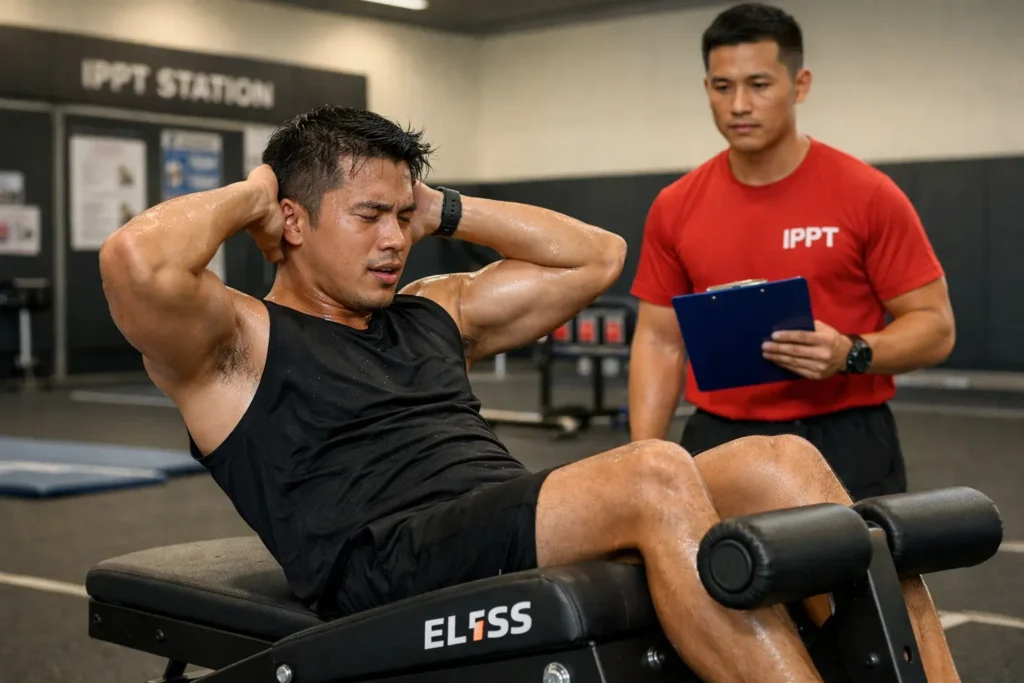
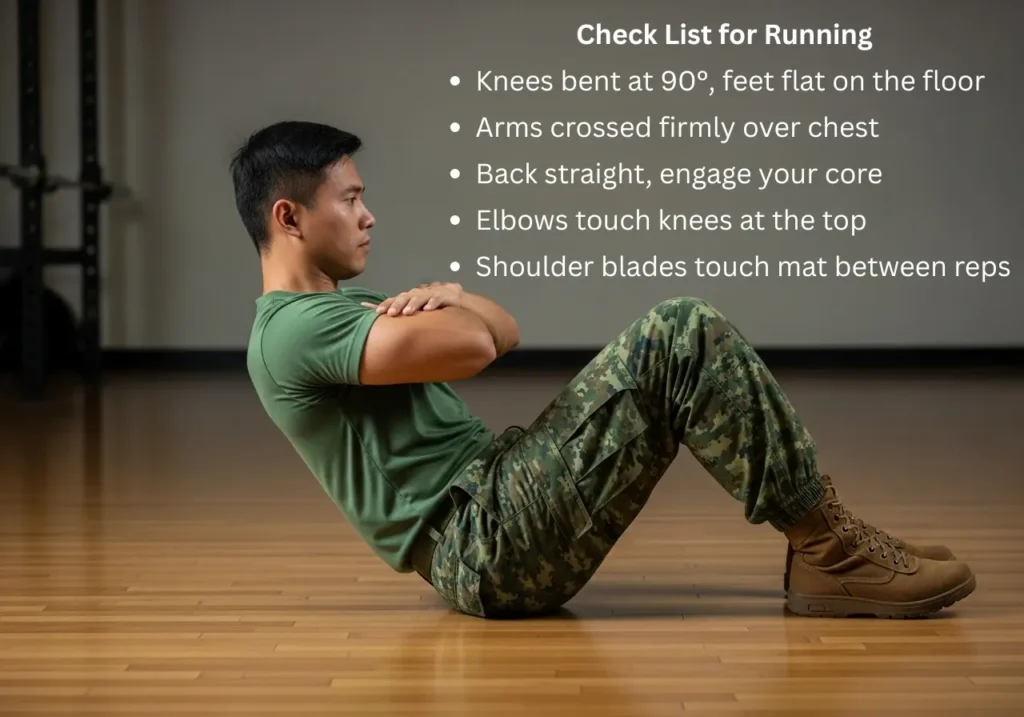
During the test, your body position matters just as much as how many reps you do. Start by lying flat with your knees bent roughly 90 degrees. Your hands should stay behind your head or at your temples.
- At the top of the rep, both elbows must touch your knees.
- At the bottom of the rep, your shoulder must touch the ground.
Your feet will be held down by a partner or device, so train that way too. Practicing in test-like conditions helps you get comfortable with the motion and pace. To ace your sit-up station for Gold, this article explains the 60-second strategy that actually works.
Preparing for the IPPT Push-Ups Station
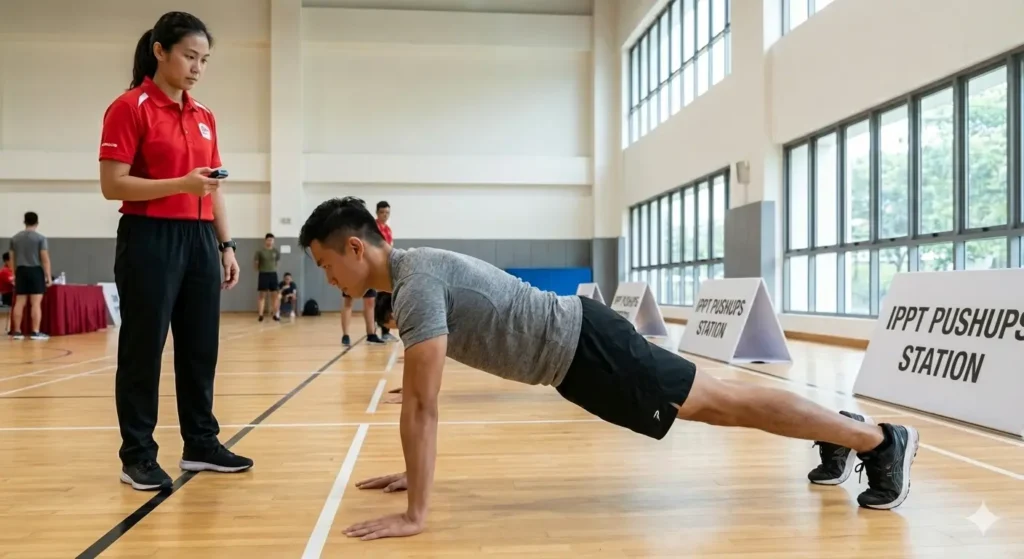
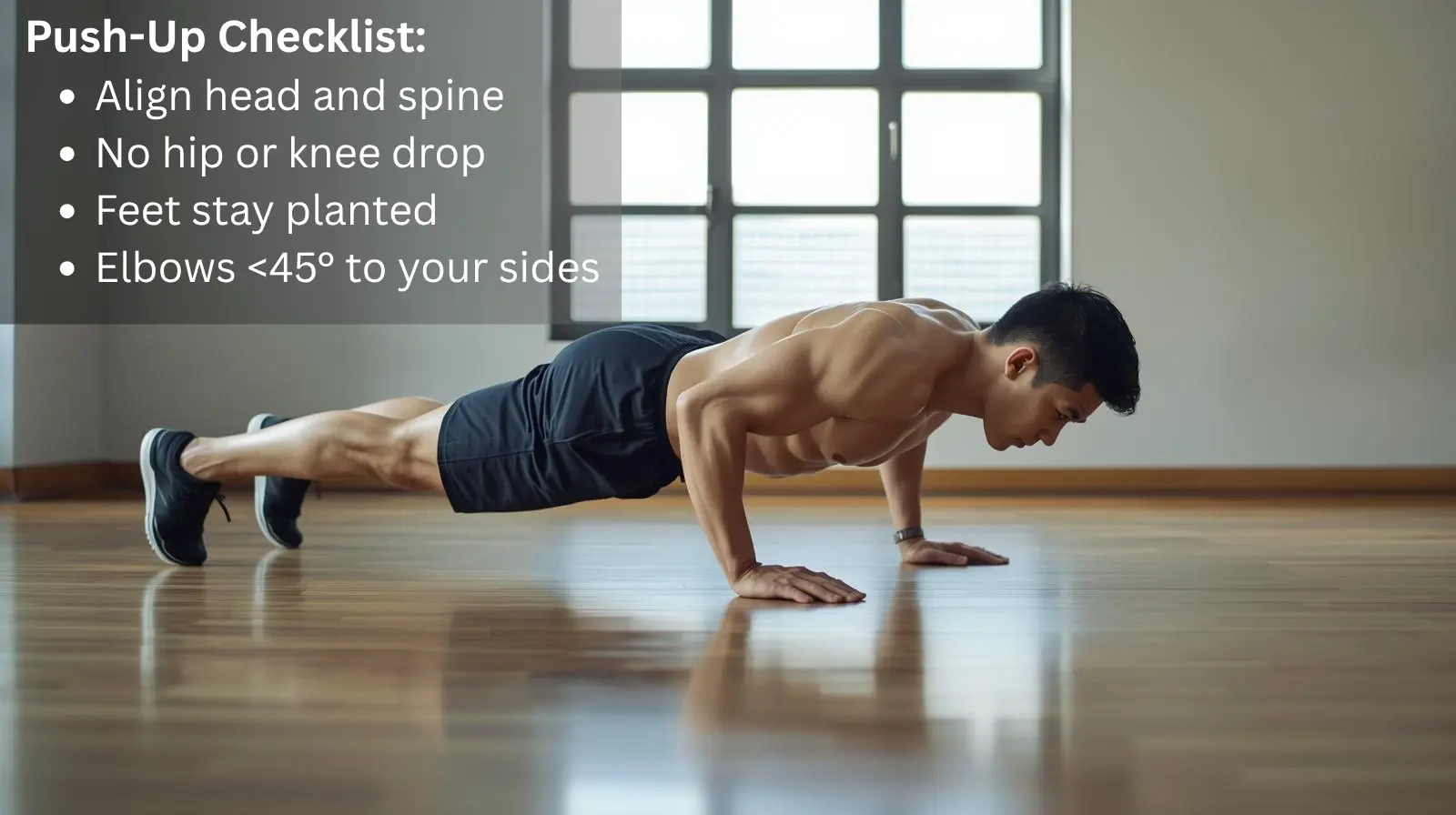
Most people go into push-up training thinking it is purely an arm strength problem. It is not. The push-up station is where form kills points more than fitness does. You can be strong and still lose half your reps to the ELISS sensor because your body position was slightly off. That is the part worth understanding first.
Get Your Form Right Before You Train Hard
Place your palms on the ground and get in the famous plank position, the width of your palms should be a little wider than your shoulder and your elbows should be fully straight. Your body must stay in a line from head to heel throughout the entire rep. lower your chest until it is just above the ground, then push back up until your elbows are fully locked out at the top. Things that make most people fail the push up test are number 1, their hips begin to sag in last seconds as they get tired and number 2 their elbows at the top are not fully locked. The ELISS machine catches both. Fix these in training, not on test day.
Which Muscles do the work
Push-ups load the chest, shoulders, and triceps primarily. Your core is the main muscle that supports this beautiful exercise and the moment it fatigues; your hips go down along with your form. The people who only train push-ups without any core work tend to break down in the last seconds of the test. I recommend doing core exercises like planks and dead bugs to your routine builds the stability that keeps your reps ok when you are tired. Wondering if protein supplements can help you recover faster and train more consistently? Here’s the honest answer.
Pacing Through the Minute
The single biggest mistake starts too fast. Going all out in the first 20 seconds feels strong but leaves nothing for the back half. Start at about 70% effort, find a breathing rhythm, inhale on the way down, exhale on the way up and hold that pace through the first 40 seconds. Then push into the final 20 when the timer is almost done.
To pass, most age groups need around 30 to 35 clean push-ups. Silver or Gold requires 40 to 50 or more depending on your age group. If you are still getting no-counts despite putting in the reps, this guide explains exactly what the ELISS sensor is looking for and how to fix it.
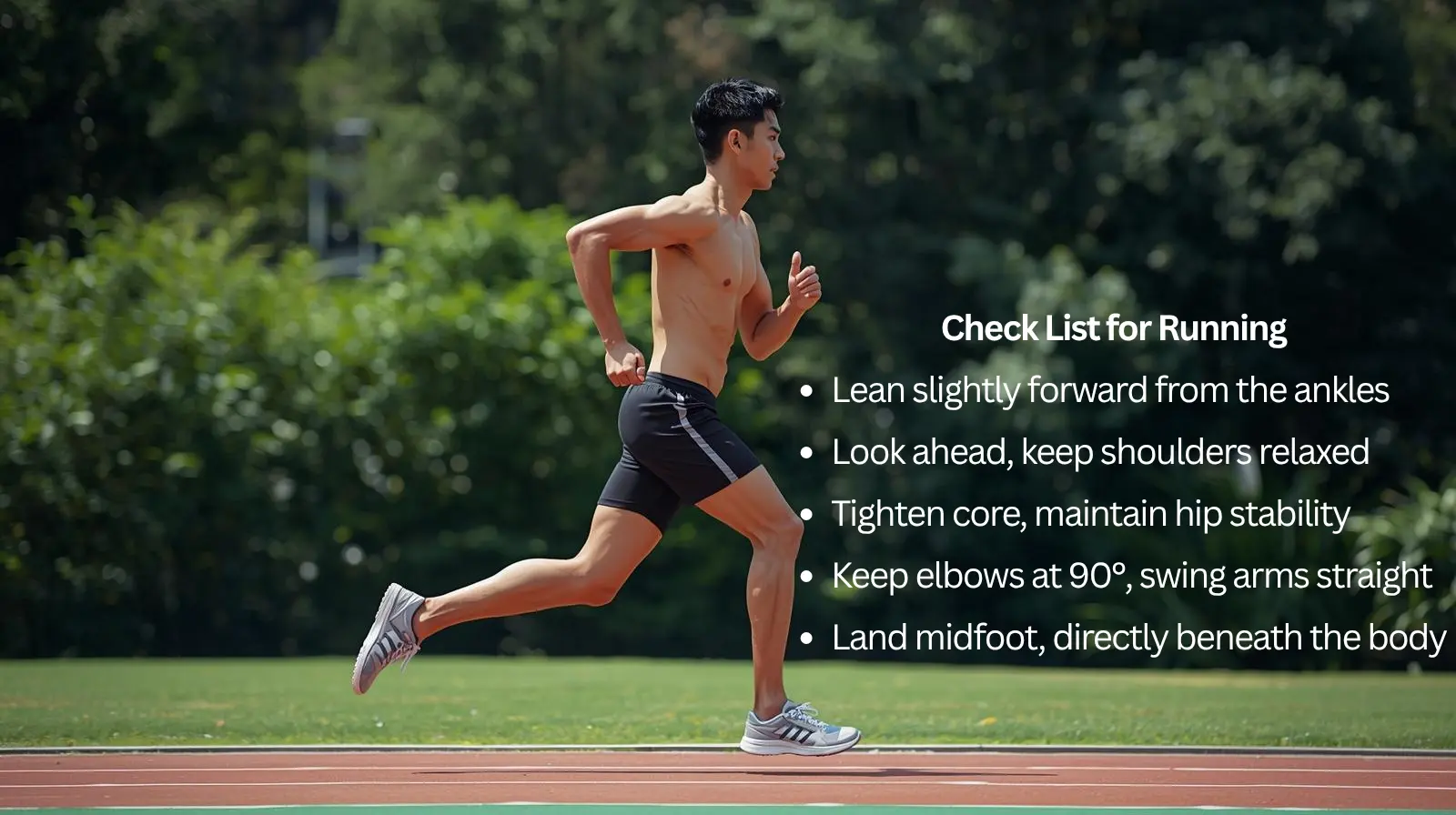
Preparing for the IPPT 2.4 km Run
The 2.4 km run is where many people either pass comfortably or struggle the most. It is not about brute strength like push ups or sit ups. This one is about stamina, cardio vascular strength, and how well your body perform in an endurance test that challenges the limits of your muscles.
Build a steel solid foundation
Before worrying about speed, get your body used to running regularly. Try doing two or three easy runs each week where you can still talk while running. You may feel that in that pace, you never going to pass your IPPT score, but remember, good things starts small. Your consistency-loving brain will tell your body not to burn out and keep going. I used to skip this and go straight for fast runs, but that only made me tired too early. Once I focused on slower, longer runs, my timing started improving on its own.
Master Your Pacing Strategy
Most runners begin fast as they have time pressure of the test in their minds, the result is a lack of oxygen in the muscles and they run out of breath. In the first four laps of 400m each, keep a mindset of a marathon racer, slow but steady, then speed up in the last 800 meters. That last stretch is where you earn your timing. Try running in different speed intervals e.g. run fast in first 400 meters, then slowly jog in next 200 meters, then repeat again. At first, it feels tough, as your body is subjected to varying amounts of stress, but this kind of training makes the actual 2.4 km run feel easier because your mind and body get used to harsher conditions of the run.
Use a timing app or the IPPT chart to track your pace and see your progress. Be patient with it. With regular training and a bit of discipline, your run time will start to drop, and that Gold standard will start to feel possible.
This guide explains how to improve your IPPT 2.4km run timing with a practical training approach.
Booking Your IPPT Session in Singapore
If there is one thing I learned about IPPT, it is that booking early really helps. The OneNS portal lets you pick a session up to three months in advance, and it is worth doing as soon as your window opens. When I delayed mine once, I ended up with only evening slots left, and it messed up my training rhythm completely. Booking early takes away a lot of stress. It feels safe when you are not doing anything in the haste plus you can keep your focus on practice. I don’t know about you, but whenever I tried to do things in 11th hour, somehow everything in the world tried to give me a tough time.
How to Book for Test?
Log in to the OneNS Portal and go to the section called ‘Manage IPPT/NS FIT’. In this section, you can see all the available time slots for IPPT test, please select the date and time of the test by considering your job and other commitments. After booking your session, you’ll get a transaction code. Keep that safe. It’s your proof that you’ve registered for the test, and it will be useful for your job leave. I usually just take a screenshot and save it on my phone, it’s a small, handy habit that saves me a lot of time.
Change your Booking
In case of an emergency when you can’t show up for the test, you can easily change or cancel your slot on the portal. Just remember, for morning or afternoon sessions, you have to do it before midnight. I once missed that cutoff by a few minutes and had to stick to my original slot learned that the hard way. So double-check your plans early. For evening sessions, the deadline for changes is before 1200hrs on the day of the session. You can’t do this on a phone call to NS, if you no longer plan to attend, cancel your booking online early, so that the slot becomes available to other NSmen.
What happens if Sessions Are Cancelled?
Sometimes an IPPT session might get cancelled. It does not happen often, but it can be due to weather, changes in safety rules, or other operational stuff. If it happens and your test window is almost closing, do not panic. The best thing is to reach out to your unit’s S8 or the National Service Relations Officer and let them know what is going on. They will usually guide you on what to do next or help you rebook another slot.
The Birth of National Service
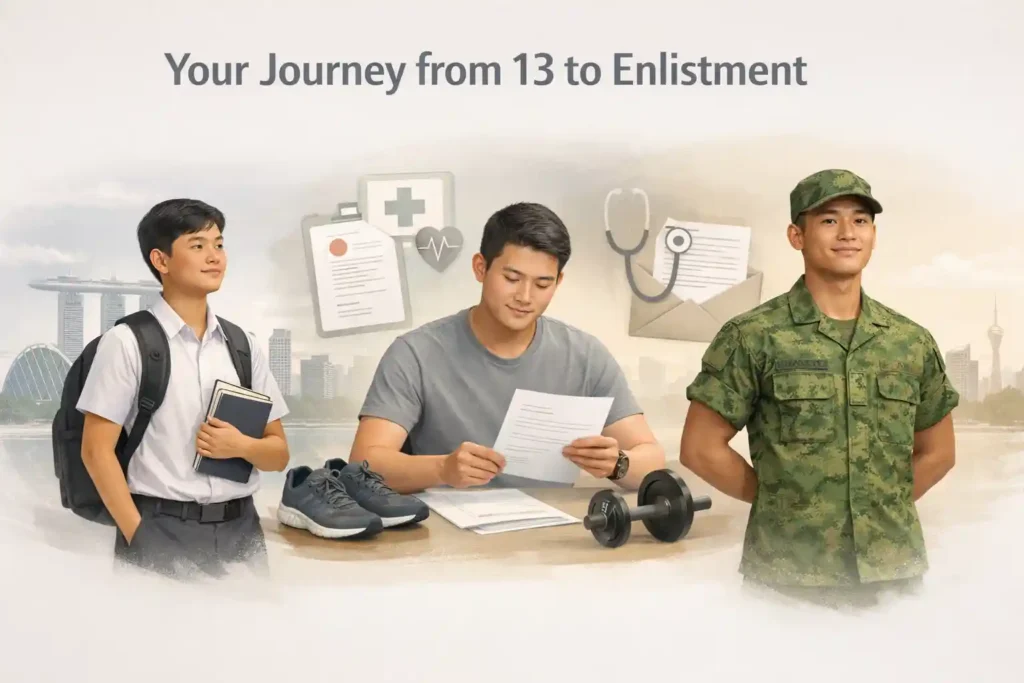
National Service has been mandatory for every male Singapore citizen and second-generation PR since 1967. From that first CMPB medical appointment at 16½ to ORD and beyond into reservist life, every step of the journey comes with specific IPPT and fitness obligations attached. For the complete picture of what the NS journey looks like from age 13 to MINDEF Reserve, our strategic guide to the NSman lifecycle covers every stage in detail.
Pre-enlistment, PES and Training
The NS journey begins at around 16½ years old, when recruits receive their pre-enlistment instructions. Their first major appointment is at CMPB, where they undergo medical screening, PES classification, and fitness assessments. You can check details of PES classification on official CMPB site.
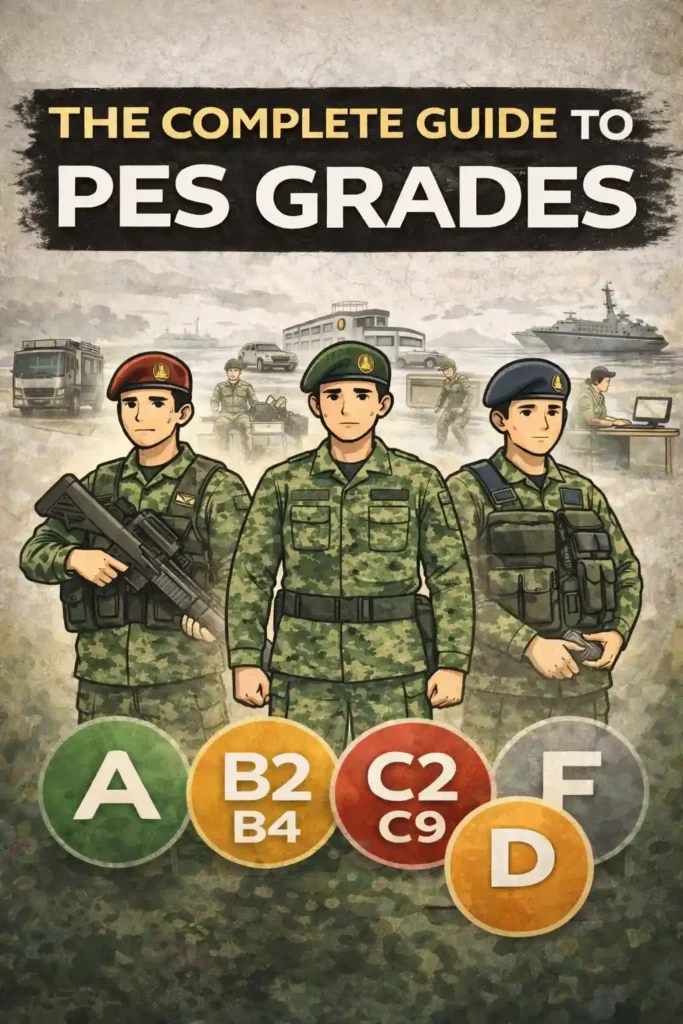
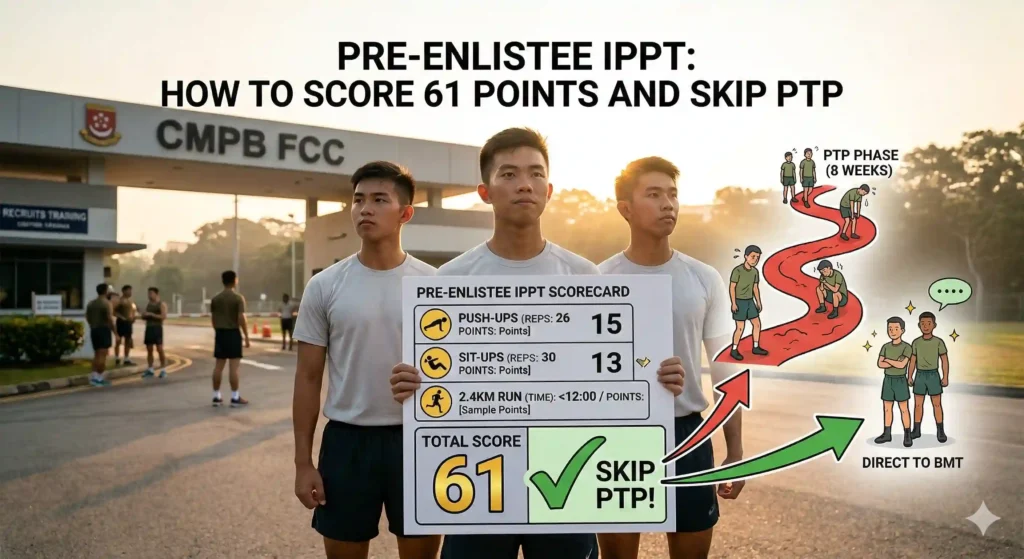
- Recruits medically graded PES A or B1 who score 61 points or more in the Pre-Enlistee IPPT (minimum 1 point per station) qualify for an 8-week reduction in full-time NS and if you’re unsure how PES affects training, vocations, and fitness expectations, our complete “PES guide” breaks it down clearly”.
- IPPT score must be achieved at least 2 weeks before the PTP enlistment date. Those who qualify will skip the Physical Training Phase (PTP) and go straight to the 9-week BMT.
- Recruits from Junior Colleges, Millennia Institute, Polytechnics, or ITE who have taken the modified NAPFA test do not need to take a separate Pre-Enlistee IPPT.
- Recruits can book and attempt the Pre-Enlistee IPPT multiple times, but only one booking can be active at a time.
- Pre-Enlistee IPPT results are valid for 1 year.
For students, deferments are often granted to allow completion of major academic milestones such as O-Levels, A-Levels, polytechnic diplomas, or university studies. Students planning to study overseas also need to understand the Exit Permit and $75,000 bond, our Pre-Enlistee Toolkit covers this in full.
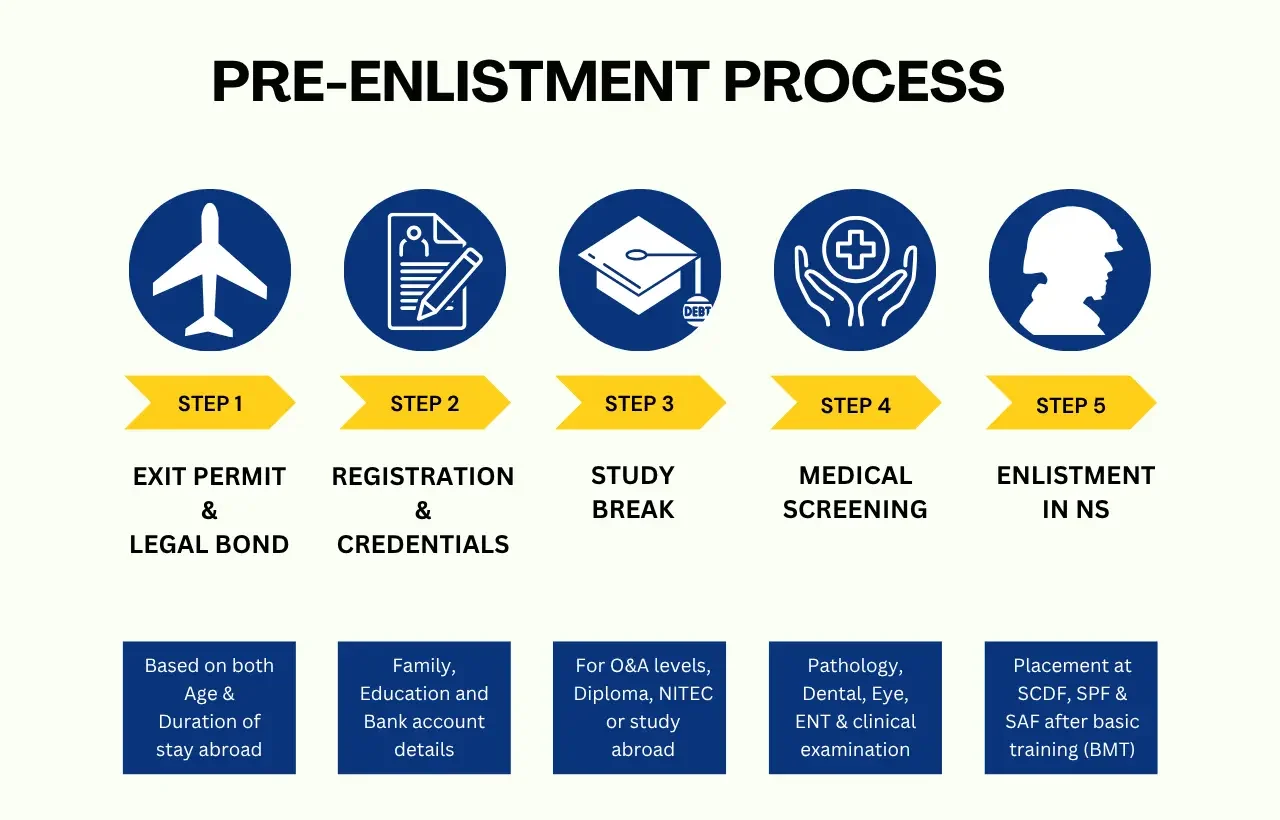
Before enlistment, every recruit undergoes a Body Mass Index (BMI) assessment to gauge weight relative to height.A BMI above 27.0 places a recruit in the obese category. Those in this range are placed on a 19-week Basic Military Training (BMT) programme, which focuses on gradually improving physical fitness. Calculate your BMI just below:
BMI Calculator
Enlistment day is a milestone. Recruits head to Pulau Tekong for Basic Military Training (BMT), which focuses on physical conditioning, military discipline, weapons handling, and team cohesion. Vocation assignments depend on PES status, aptitude scores, and SAF needs, our complete PES guide explains what each grade means for your NS journey.
During full-time NS (around 2 years), servicemen receive monthly allowances ranging from approximately S$790 to over S$1,955, for more details read NS pay guide. They continue to train, maintain fitness, and adapt to military life, culminating in their Operationally Ready Date (ORD), the end of their full-time service.
Who This Calculator Is For
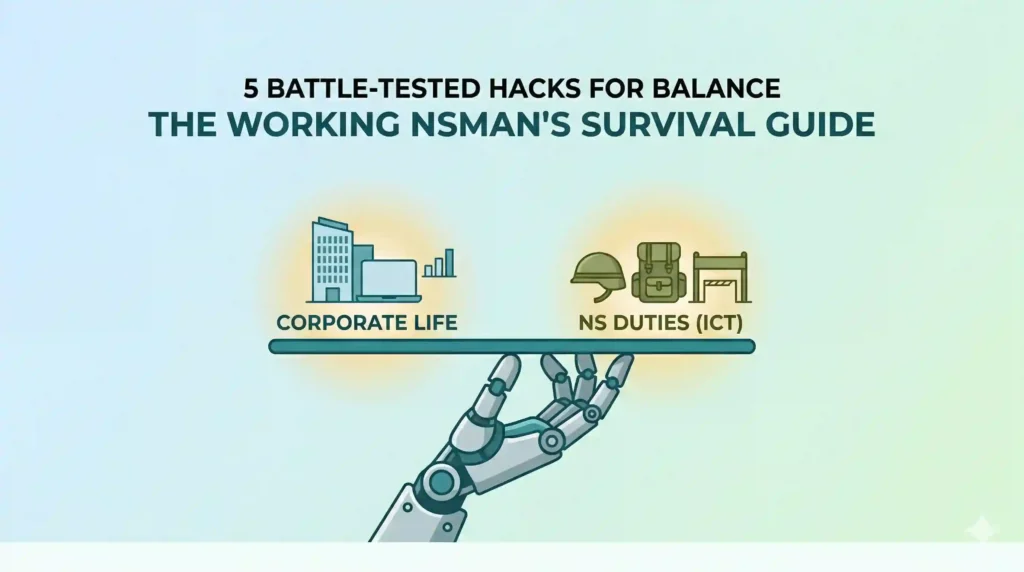
National Service is mandatory for every male Singapore citizen and permanent resident. Whether you are about to enlist, currently serving full-time, or juggling reservist obligations alongside a career and family, the IPPT follows you through all of it. This tool was built to make that one part of NS life significantly less stressful.
If you are a Pre-Enlistee
Your first encounter with IPPT matters more than most people realise. Score 61 points or more in your Pre-Enlistee IPPT and you skip the Physical Training Phase entirely, that is 8 weeks off your full-time NS duration before you even step into Pulau Tekong. Use this calculator to find out exactly how many push-ups, sit-ups, and what 2.4km timing you need for your specific age group to hit that 61-point mark. Then use the NS Master Roadmap to understand everything else that happens between now and enlistment day.
If you are a Full-Time NSF
You are training hard but you want to know if it is enough. The calculator tells you instantly. Plug in your current numbers and see exactly where you stand, which station is costing you the most points, and how many extra reps or seconds you need to cross from Pass into Silver or Silver into Gold. The $500 Gold incentive is real money. Knowing your exact gap is the first step to closing it.
If you are an NSman
Your IPPT window opens on your birthday and closes the day before your next one. That sounds like plenty of time until suddenly it is not. The smartest thing you can do is check your numbers now, not two weeks before the window closes. Use the calculator to find your current score based on honest training numbers, identify which station gives you the easiest points gain, and build your prep around that. For NSmen, IPPT is not just a fitness test, it is a legal obligation. Failing to attempt it within your window can result in fines. Our guide on how smart NSmen avoid fines covers exactly what to do if something goes wrong. If you have a legitimate injury or work emergency, here’s exactly how IPPT deferrals and MC exemptions work.
How the Test Works
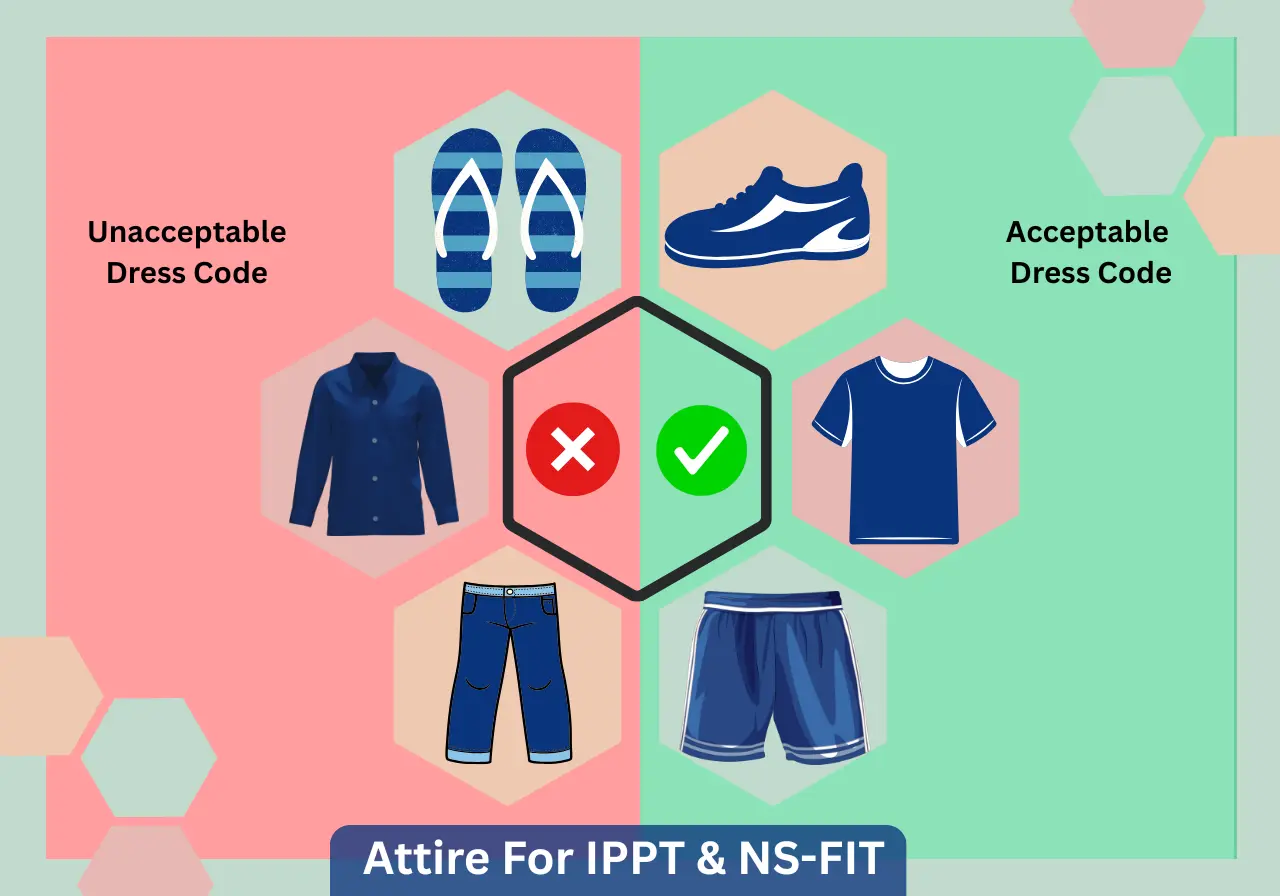
IPPT for eligible NSmen is conducted at Fitness Conditioning Centres (FCCs) in Singapore. Available IPPT sessions can be booked through the OneNS portal, with bookings available up to three months in advance. The test consists of three stations: push-ups, sit-ups, and the 2.4km run. You need a minimum total score of 51 points, with at least 1 point from each station, to pass.
Early booking gives you the best slot choices and removes a significant amount of test-day stress.
To avoid common test-day mistakes, read our guide on what to eat and how to prepare at the FCC.
Note: Scores and standards based on official MINDEF and SAF guidelines. All data verified against current NS.gov.sg and CMPB standards.
Built by Experienced NS Coaches & Fitness Experts
This calculator was built by a team of former NS coaches and fitness trainers with a combined 15+ years of IPPT training experience. Our articles are written by Tommy Yau Heng Ho, Eunice Phua, and Jeannie Chia, all with direct NS coaching backgrounds.